
Marble is one of the most beautiful natural stones used in homes, hotels, temples, commercial spaces, and luxury interior projects. Its elegant appearance, unique veins, and natural colour variations make every marble installation special. However, one common question customers often ask when purchasing marble is: Why does marble have different shades in different slabs?
The answer lies in the natural formation of marble, the internal structure of the stone, the direction of its veins, and the way the marble block is cut into slabs.
Unlike manufactured materials, marble is not produced in a factory with a uniform colour and pattern. It develops naturally inside the Earth over thousands or millions of years. As a result, variations in colour, veins, mineral composition, and texture are completely natural.
At Evershine Marbles, we understand that selecting marble is an important decision for homeowners, architects, interior designers, builders, and marble dealers. In this blog, we explain why marble slabs can have different shades, how cutting direction affects the final appearance, and what buyers should understand before selecting marble for their projects.
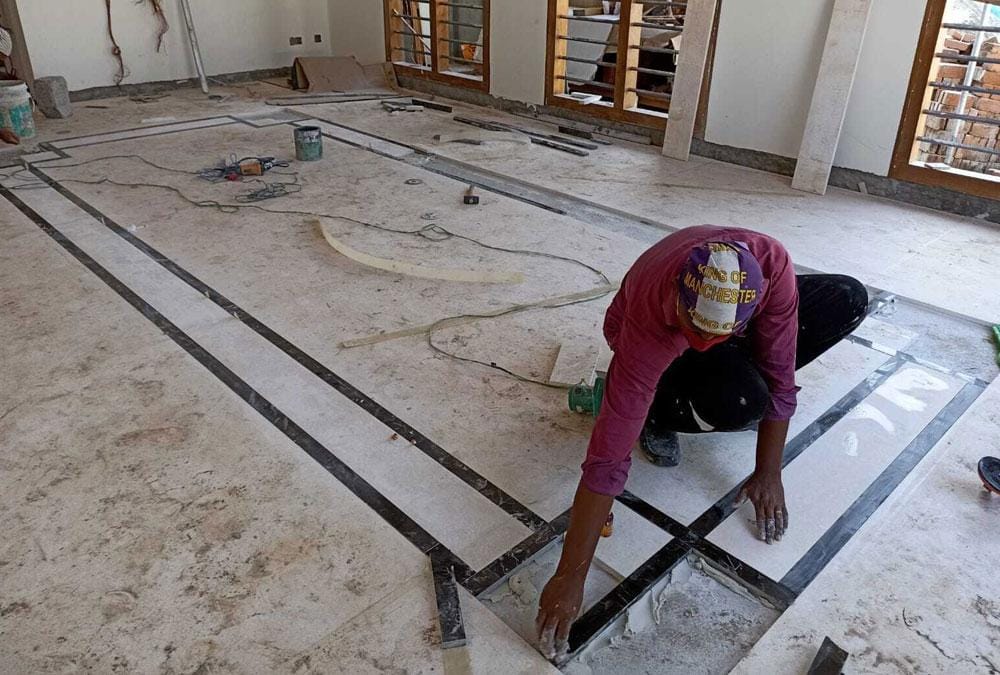
Why does marble have different shades in different slabs?
1. Marble Is a Natural Stone, Not a Manufactured Product
The primary reason marble slabs have different shades is that marble is a natural stone. Each marble block develops under specific geological conditions, and these conditions are rarely identical throughout the entire block.
During its formation, marble may contain different mineral concentrations, natural veins, pressure-related features, and variations in its crystalline structure. These characteristics can create differences in colour and appearance even within the same block.
For example, white marble may appear milky white in one slab, slightly greyish in another, or display subtle cream, beige, or other mineral-related shades in different sections.
Similarly, two slabs of the same marble variety may have different vein patterns, colour intensity, or background tones.
Common natural variations in marble
- Background colour: The base colour may vary from bright white to milky white, cream, or light grey.
- Vein patterns: Veins may change in thickness, direction, spacing, and intensity.
- Mineral distribution: Different concentrations of minerals can create natural colour variations.
- Internal structure: Natural fractures, layers, and geological features can influence how a block is cut.
- Colour patches: Some blocks may contain areas with two or more naturally occurring shades.
These variations are not necessarily defects. They are part of the natural character of marble and contribute to its distinctive appearance.
2. How Does Marble Cutting Direction Affect Slab Shades?
One of the most important reasons for shade differences between marble slabs is the direction in which the block is cut.
A marble block is a three-dimensional natural structure. Its veins, layers, and internal features do not always run in a straight or uniform direction. When the block is cut into slabs, the appearance of each slab depends partly on the angle and direction of the cut.
Even if two slabs come from the same block, they may look different when their cutting directions expose different parts of the stone’s internal structure.
Understanding the relationship between cutting and veins
Imagine a marble block with veins running diagonally through it. When the block is cut in one direction, the veins may appear long, flowing, and relatively continuous. When the cutting direction changes, the same veins may appear shorter, thicker, more scattered, or differently oriented.
This happens because cutting exposes different sections of the natural vein structure.
| Cutting condition | Possible appearance of the marble slab |
|---|---|
| Cutting follows the natural vein direction | Veins may appear longer and more continuous |
| Cutting crosses the veins | Veins may appear shorter, thicker, or more fragmented |
| Cutting exposes a different internal layer | The background shade may change |
| Cutting follows a naturally consistent section | Slabs may have a more similar appearance |
| Cutting encounters an irregular vein or fracture | The pattern may change or require a different cutting approach |
Therefore, cutting direction plays an important role in the final appearance of marble slabs.
3. Why Do Marble Slabs Sometimes Look Similar in a Lasa Pattern?
When customers want a uniform marble design, they often prefer slabs with matching shades and similar vein patterns. One way to achieve a coordinated appearance is to select and cut the marble in a manner that reveals a consistent natural pattern.
For example, when the natural veins and layers of a marble block follow a relatively consistent direction, cutting successive slabs in a compatible direction may produce similar-looking patterns.
Depending on the stone’s natural structure and the cutting method, the resulting slabs may be arranged to create a coordinated or bookmatched effect. Bookmatching involves placing adjacent slabs so their vein patterns mirror each other.
However, a matching pattern cannot always be guaranteed. The natural structure of the block determines what is possible.
If a marble block contains irregular veins, changing layers, or fractures that run in different directions, the cutting approach may need to be adjusted. In such cases, the slabs may not reproduce the same pattern throughout the entire block.
The important point is that similar-looking marble slabs depend on both the natural structure of the block and the direction in which it can be cut.
4. How Natural Cracks and Fractures Influence Marble Cutting
Another important reason for different shades and patterns is the presence of natural cracks, fractures, or structural lines inside a marble block.
These features develop naturally as the stone forms and undergoes geological changes. Some may be visible on the surface, while others become apparent only when the block is cut.
Suppose a block contains veins that run in one direction, but a natural fracture extends diagonally or in the opposite direction. Cutting the block solely to maintain a uniform vein pattern may not be practical if that approach risks exposing an undesirable fracture or compromising the usable slab.
The cutting direction may therefore need to change to follow the natural structure of the stone or obtain suitable slab dimensions and quality.
When this happens, the veins may be exposed at a different angle. As a result, the slabs can display different shades, patterns, and vein arrangements.
Why changing the cutting direction matters
- Natural fractures influence the cutting plan. The internal structure may limit the available cutting directions.
- The veins may be exposed differently. A change in cutting direction changes the way the veins appear on the slab surface.
- The background colour may look different. Different sections of the block can reveal different mineral concentrations or layers.
- Pattern consistency may vary. Slabs from different sections may not have identical designs, even when they belong to the same marble variety.
Experienced marble processors consider these natural characteristics when planning the cutting process. The aim is to obtain usable slabs while respecting the structure of the stone and making the best possible use of the block.
5. Why Can Marble Have Two Different Colours in the Same Block?
Sometimes, marble has two noticeably different shades within a single block. For example, one portion may appear predominantly white, while another section may contain grey, cream, beige, or darker patches.
This is known as natural colour variation, and it can occur even when the block is cut from different sides.
The reason is that the internal composition of marble may not be uniform throughout its entire volume. Different mineral concentrations, natural layers, and geological conditions can produce multiple colours within the same stone.
Common examples of double-colour marble
- White marble with grey veins or patches.
- Milky white marble with cream-coloured areas.
- Marble with alternating light and dark bands.
- Marble containing irregular mineral deposits.
- Marble with a consistent base colour but different shades across its surface.
In these situations, changing the cutting direction may alter how much of each colour appears on the slab, but it cannot necessarily eliminate the variation.
If a block naturally contains two different colour zones, some slabs may show more of one shade than others. This is why customers may notice variations between slabs even when the same cutting method is used.
6. Main Reasons Why Different Marble Slabs Have Different Shades
The following table summarises the major factors that influence the colour and appearance of marble slabs.
| Reason | How it affects the marble |
|---|---|
| Natural stone formation | Creates inherent differences in colour and texture |
| Mineral composition | Influences white, grey, cream, and other shades |
| Cutting direction | Changes how veins and internal layers appear |
| Natural cracks and fractures | Can influence the cutting plan and pattern continuity |
| Different sections of the block | May reveal different background colours or mineral concentrations |
| Vein orientation | Changes the visual direction and appearance of the pattern |
| Natural colour zones | Can produce two or more shades within the same block |
| Surface finishing | Can influence how colour, contrast, and veins are perceived |
It is important to understand that these factors can work together. A difference in shade may result from one factor or a combination of several natural characteristics.
7. Is Different Shade in Marble a Defect?
Not necessarily. Shade variation is a normal characteristic of natural marble, but whether a particular variation is acceptable depends on the customer’s expectations, the intended application, and the agreed selection criteria.
Some customers prefer a consistent, uniform appearance, particularly for large floors, wall cladding, reception areas, and luxury interiors. Others appreciate stronger natural variations because they give the stone a distinctive and organic appearance.
The key is to understand the material before installation.
What should buyers check before purchasing marble?
- Background shade: Check whether the overall colour is suitable for your design.
- Vein direction: Look at the direction and density of the natural veins.
- Slab-to-slab consistency: Compare the actual slabs intended for the project.
- Natural cracks and markings: Understand the difference between natural features and structural concerns.
- Surface finish: View the marble in the intended finish, such as polished or honed, where available.
- Lighting conditions: Check the slabs under lighting similar to that of the final installation.
- Installation layout: Plan the arrangement of slabs before fixing them to the floor or wall.
For projects requiring close shade matching, selecting and inspecting the slabs together before installation is especially important.
8. How Can You Get More Consistent Shades in Marble Slabs?
Although natural marble cannot be made perfectly uniform, careful selection and planning can help achieve a more consistent appearance.
Step 1: Select slabs from the same available lot
Where possible, choose slabs from the same block or production lot. This may improve consistency, although it does not guarantee identical shades.
Step 2: Inspect the actual slabs
Do not rely only on a small sample, catalogue photograph, or display piece. A small sample may not represent the complete colour and vein variation of a larger block.
Step 3: Check the cutting direction
Ask about the vein direction and how the slabs have been cut. Understanding the natural pattern helps you assess whether the slabs can be arranged to create a coordinated appearance.
Step 4: Arrange the slabs before installation
For larger projects, dry-laying or planning the slab sequence can help identify colour transitions and create a more balanced overall design.
Step 5: Discuss your expectations with your marble supplier
If your project requires a predominantly milky white background, a specific vein direction, or closely matched slabs, communicate those requirements before finalising the selection.
A knowledgeable supplier can help you understand the available material and the realistic level of shade consistency that can be achieved.
9. Can Every Marble Block Produce the Same Shade and Pattern?
No. Every marble block has its own natural characteristics, and not every block can produce perfectly identical slabs.
Some blocks have relatively uniform colours and consistent veins, making it easier to obtain slabs with similar appearances. Other blocks contain irregular fractures, changing vein directions, different mineral concentrations, or multiple natural colour zones.
In such cases, even careful cutting may produce slabs with noticeable variations.
The objective of professional marble processing is to work with the natural structure of the stone, select suitable cutting directions, and maximise the quality and usability of the resulting slabs.
This is why customers should evaluate marble as a natural material rather than expect the exact uniformity of a manufactured surface.
10. Why Choose Evershine Marbles for Your Marble Requirements?
At Evershine Marbles, we understand the beauty and individuality of natural stone. Marble selection involves more than choosing a colour from a photograph. It requires understanding the natural shade, vein pattern, surface finish, and overall appearance of the available material.
Whether you are looking for elegant white marble, milky white marble, marble for luxury interiors, or natural stone for residential and commercial projects, it is important to choose material that suits your design requirements.
Our focus is on helping customers explore marble options and understand the characteristics of the stone they select.
Why understanding your marble matters
- Make informed decisions about natural shade variations.
- Choose slabs that complement your interior design.
- Understand the effect of veins and cutting direction.
- Plan slab arrangements for floors, walls, and other applications.
- Set realistic expectations regarding natural colour consistency.
Evershine Marbles serves customers seeking marble and natural stone for projects of different sizes, with delivery available across India and internationally, subject to product availability and shipping arrangements.
If you are planning a marble project, contact Evershine Marbles to discuss your requirements and explore suitable natural stone options.
Frequently Asked Questions About Marble Shade Variations
1. Why do marble slabs from the same block have different shades?
Marble slabs from the same block may have different shades because the stone contains natural variations in mineral composition, internal layers, veins, and colour zones. The direction in which the block is cut also affects how these features appear on the surface.
2. Does cutting direction affect marble colour?
Yes. Cutting direction affects which parts of the stone’s internal structure are exposed. This can change the appearance of veins, the distribution of colours, and the overall visual pattern of the slab.
3. Why do marble veins look different in different slabs?
Natural veins do not always run in a straight or uniform direction. When a block is cut into successive slabs, the veins may appear longer, shorter, thicker, thinner, or differently oriented depending on the cutting angle and the internal structure of the stone.
4. Why does white marble sometimes have grey or cream shades?
White marble may contain varying amounts of minerals and naturally occurring colour zones. These characteristics can create grey veins, cream patches, or other subtle shades within the same block.
5. Can marble slabs be selected to achieve a uniform appearance?
Yes, careful slab selection, inspection, and layout planning can help achieve a more consistent appearance. However, because marble is a natural stone, perfectly identical shades and patterns cannot always be guaranteed.
6. Is natural shade variation a sign of poor-quality marble?
No. Shade variation alone does not indicate poor quality. However, the stone’s overall quality, structural condition, suitability for the application, and the customer’s specified requirements should all be evaluated.
7. Can all slabs from one marble block have the same pattern?
Not always. The result depends on the natural vein structure, internal fractures, mineral distribution, and cutting direction. Some blocks produce relatively consistent patterns, while others naturally produce more variation.
8. Should I inspect marble slabs before installation?
Yes. Inspecting the actual slabs and planning their arrangement before installation can help you understand shade differences, identify the best layout, and achieve a more balanced final appearance.
Conclusion: Every Marble Slab Tells a Natural Story
The reason marble has different shades in different slabs is simple: marble is a natural stone with a unique internal structure. Its colour, veins, mineral composition, natural fractures, and cutting direction all influence the final appearance.
Sometimes, cutting a block in a consistent direction can produce slabs with similar patterns. In other situations, natural cracks or changes in the stone’s internal structure require a different cutting approach, causing the veins and shades to appear differently. Some blocks also contain multiple natural colours, regardless of the cutting direction.
Understanding these factors helps buyers make better decisions, plan their installations, and appreciate the natural beauty of marble.
Looking for beautiful natural marble for your next project?
Choose Evershine Marbles for exploring marble varieties suited to your design requirements. Whether you are planning a home interior, a luxury commercial space, or a large architectural project, our team can help you understand your marble options.
Contact Evershine Marbles today to enquire about available marble varieties, slab selection, and delivery options. We serve customers across India and deliver internationally, subject to availability and shipping arrangements.
Evershine Marbles — Bringing the natural beauty of marble to projects around the world.