
Introduction: Choosing the Right Stone for Your Kitchen
A kitchen countertop is one of the most frequently used surfaces in any home. From preparing daily meals and chopping vegetables to placing hot utensils, handling oil and spices, and cleaning the kitchen, the countertop experiences regular use. Therefore, selecting the right material is just as important as choosing the right kitchen design.
When homeowners plan a new kitchen or renovate an existing one, three materials commonly come into consideration: marble, granite and quartz. Each material has its own appearance, properties, advantages, limitations and price range. Evershine Marbles Private Limited via Makrana & Kishangarh branches, has been dealing in all 3 categories for last 25 years.
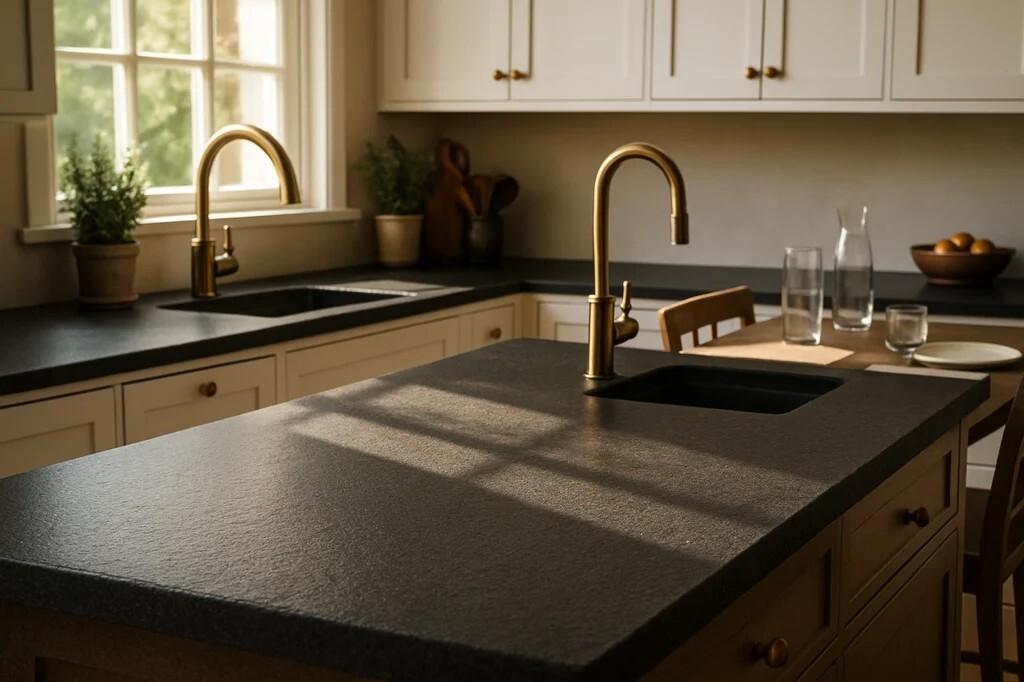
One of the most common questions customers ask is: Can marble be used for kitchen countertops? Is marble durable enough for everyday kitchen activities? Should you choose granite for better durability or quartz for easier maintenance?
The answer depends on the type of stone, its physical properties, the way your kitchen is used and your budget.
Marble is not unsuitable for kitchens. In fact, selected varieties of dense and durable marble can be used for kitchen countertops when properly evaluated, fabricated and maintained. However, not every marble variety is suitable for a busy cooking area. Some varieties have higher water absorption, are more sensitive to acidic substances or require additional maintenance.
Granite is a popular natural-stone choice because of its hardness, durability and heat resistance. Engineered quartz, on the other hand, offers a consistent appearance, low porosity and convenient maintenance.
In this detailed guide, we will compare marble, granite and quartz based on their durability, hardness, water absorption, stain resistance, heat resistance, thickness, maintenance requirements and pricing. We will also explain how to select the right stone for an Indian kitchen.
1. Can Marble Be Used in Kitchen Countertops?
Yes, marble can be used in kitchen countertops. However, selecting the right marble is extremely important.
Marble is a natural stone appreciated for its elegant appearance, attractive veins, natural patterns and timeless appeal. It is commonly used in flooring, wall cladding, bathroom designs, decorative surfaces and premium interior projects. It can also create beautiful kitchen countertops, islands and breakfast counters.
However, marble varieties differ in their physical characteristics. Some are relatively dense and compact, while others may have higher porosity or be more susceptible to scratches and chemical reactions.
For kitchen applications, you should consider the following properties before selecting a marble slab.
A. Hardness and Durability
Hardness is an important consideration when selecting marble for a kitchen countertop. The countertop is regularly exposed to utensils, kitchen equipment, containers and other objects that can cause scratches.
A denser and harder stone with good structural integrity is generally preferable to a softer variety.
However, hardness alone does not determine kitchen suitability. A stone may be hard but still have higher water absorption or sensitivity to acidic substances.
Always evaluate the actual marble variety rather than selecting it only by its colour or appearance.
B. Water Absorption and Porosity
Water absorption is another important factor when choosing marble for kitchen countertops.
During everyday cooking, countertops come into contact with water, oil, coffee, tea, sauces and other liquids. A highly porous stone may absorb these liquids, increasing the possibility of staining.
Therefore, customers should look for marble with relatively low water absorption and a compact structure.
Certain selected varieties of Vietnamese white marble and other dense marble varieties may be considered for this purpose, subject to their actual technical properties.
It is important to understand that the country of origin alone does not guarantee low absorption. Always check the specific slab’s technical data or ask for a water absorption test.
C. Resistance to Stains
Kitchen countertops are exposed to different food ingredients, including turmeric, oil, lemon juice, vinegar, tomato and other substances.
Marble can be vulnerable to staining, especially when liquids remain on its surface for a long time.
A suitable stone sealer can help reduce the absorption of staining liquids. However, sealing does not make marble completely stain-proof or prevent chemical etching.
For better performance:
- Clean spills as soon as possible.
- Use a suitable impregnating sealer.
- Avoid harsh acidic cleaning products.
- Use cutting boards and protective mats.
- Clean the surface with a pH-neutral stone cleaner.
D. Resistance to Acids
This is one of the most important points customers should understand before purchasing marble for their kitchens.
Most conventional marble is primarily composed of calcite. Acidic substances such as lemon juice, vinegar and tomato can react with the stone and cause dull marks known as etching.
Etching is different from ordinary staining. It is a chemical reaction that affects the surface finish.
Even a sealed marble countertop can experience acid etching. Therefore, homeowners who regularly use acidic ingredients should understand this limitation before choosing marble.
E. Appearance and Natural Beauty
One of the biggest advantages of marble is its appearance.
Natural veins, beautiful backgrounds and unique patterns give every marble slab an individual identity. Marble can complement modern, traditional, luxury and minimalist kitchen designs.
White marble is especially popular for bright and spacious kitchen interiors. Beige, grey and other natural shades can also create beautiful combinations with wooden cabinets, modular kitchens and modern appliances.
Our recommendation: Marble can be a good choice for customers who value natural beauty and are comfortable with regular care. For a heavily used cooking countertop where low maintenance is the priority, granite or engineered quartz may be more practical.
2. Marble vs Granite vs Quartz: Understanding the Difference
Before comparing prices and durability, it is important to understand that marble, granite and quartz are not the same types of materials.
Marble
Marble is a natural stone formed through geological processes. It is known for its distinctive veins, elegant appearance and natural colour variations.
Its suitability for kitchen applications depends on its mineral composition, density, absorption, hardness and resistance to acids.
Granite
Granite is a natural igneous stone known for its hardness, strength and generally good resistance to everyday kitchen conditions.
It is available in numerous colours, including black, grey, brown, white, pink and other natural shades.
Granite is widely preferred for Indian kitchens because it offers a practical combination of durability, heat resistance and different price options.
Quartz
The term quartz needs clarification because customers often confuse two different materials:
- Engineered quartz: A manufactured surface made using quartz particles combined with resin binders, pigments and other ingredients.
- Natural quartzite: A natural metamorphic stone formed from quartz-rich sandstone.
They are different materials and have different properties.
In this comparison, when we say quartz, we primarily mean engineered quartz used for kitchen countertops.
Engineered quartz is known for its relatively non-porous surface, consistent patterns and low routine maintenance. However, it contains resin, so direct contact with very hot cookware should be avoided.
3. Marble vs Granite vs Quartz: Complete Comparison
The following table provides a general comparison of these three materials for kitchen applications.
| Property | Marble | Granite | Engineered Quartz |
|---|---|---|---|
| Material type | Natural stone | Natural stone | Manufactured surface |
| Appearance | Natural veins and patterns | Natural grains and patterns | Consistent designs |
| Hardness | Generally lower | Generally high | Generally high scratch resistance |
| Water absorption | Varies; often higher | Usually low, varies by variety | Very low |
| Stain resistance | Requires more care | Good, depending on porosity and sealing | Generally excellent |
| Acid resistance | Vulnerable to etching | Generally good | Generally good |
| Heat resistance | Good, but avoid thermal shock | Very good | Avoid direct high heat |
| Scratch resistance | More susceptible | Generally very good | Generally very good |
| Sealing | Generally recommended | Depends on the particular slab | Usually not required |
| Maintenance | Higher | Low to moderate | Low |
| Natural appearance | Excellent | Excellent | Manufactured appearance |
| Price range | Low to premium | Budget to premium | Medium to premium |
Important: These are general characteristics, not guaranteed specifications for every slab. Actual performance depends on mineral composition, porosity, processing, thickness, fabrication and product quality.
4. Which Is Better for Kitchen Countertops: Marble, Granite or Quartz?
There is no single material that is the best choice for every kitchen. The correct decision depends on the homeowner’s requirements.
Why Choose Marble?
Marble is suitable for customers who want:
- Natural veins and premium aesthetics.
- Unique patterns rather than uniform designs.
- Beautiful white, grey and beige shades.
- A natural stone surface for kitchen islands.
- A luxurious appearance that complements premium interiors.
Marble can be particularly attractive for kitchen islands, breakfast counters and decorative kitchen surfaces.
However, customers should be prepared for regular maintenance and possible etching and staining.
Why Choose Granite?
Granite is an excellent choice for customers who want:
- A durable natural stone.
- Better resistance to everyday scratches.
- Good heat resistance.
- Different colour and design options.
- Budget-friendly kitchen countertop solutions.
- A natural material suitable for regular cooking.
Granite is especially popular in Indian kitchens because it can handle demanding daily usage when the right variety is selected and installed correctly.
Why Choose Quartz?
Engineered quartz is a strong option for customers who want:
- Low water absorption.
- A non-porous countertop surface.
- Better resistance to everyday staining.
- Consistent colours and patterns.
- Less routine maintenance.
- Modern and contemporary kitchen designs.
Quartz is particularly suitable for customers who prefer an easy-to-maintain kitchen surface.
However, hot utensils should not be placed directly on quartz because its resin content can be affected by high temperatures.
Our overall recommendation: Quartz is an excellent option for low-maintenance kitchens, granite is a strong choice for durability and budget, and marble is a beautiful option when natural aesthetics are the priority and the owner understands its maintenance requirements.
5. Granite for Kitchen Countertops: Why Is It a Popular Choice?
Granite has been used in kitchens for many years because of its natural strength and durability.
Unlike softer natural stones, many granite varieties have good scratch resistance and can tolerate normal kitchen heat exposure.
It is also available in different price categories, making it suitable for both economical and premium kitchen projects.
Advantages of Granite
1. High Hardness
Granite is generally harder than conventional marble. It is less susceptible to scratches from normal kitchen activities.
2. Good Heat Resistance
Granite generally handles kitchen heat better than engineered quartz. Nevertheless, using trivets and avoiding sudden thermal shocks is a good practice.
3. Different Colour Options
Granite is available in numerous colours and patterns, including:
- Black Granite
- Galaxy Black Granite
- South Black Granite
- Sira Grey Granite
- Chima Pink Granite
- Lavender Blue Granite
- Himalayan Brown Granite
- Other Indian and imported granite varieties
4. Budget-Friendly Options
One major advantage of granite is the availability of economical varieties.
Customers who want a durable natural-stone countertop without spending heavily on premium materials can explore different Indian granite options.
5. Long-Term Practicality
When properly selected, fabricated and maintained, granite can provide long-lasting performance in everyday kitchens.
Does Granite Need Sealing?
Some granite varieties have very low porosity, while others may absorb liquids more easily.
Therefore, sealing requirements depend on the actual stone. A suitable impregnating sealer can help reduce staining in absorbent varieties.
Customers should ask their supplier or fabricator about the absorption properties and recommended maintenance of the selected granite.
6. Quartz Kitchen Countertops: Is Quartz Better Than Natural Stone?
Engineered quartz has become a popular choice in modern kitchen interiors.
Unlike marble and granite, which are quarried as natural stones, engineered quartz is manufactured by combining quartz particles with resin and other materials.
This manufacturing process provides more consistent colours, patterns and surface characteristics.
Advantages of Quartz
1. Low Water Absorption
One of the biggest advantages of engineered quartz is its non-porous surface. It generally does not require the sealing used for natural stone.
2. Stain Resistance
Quartz generally offers good resistance to everyday kitchen stains such as coffee, tea and oil.
However, spills should still be cleaned promptly and manufacturer-recommended cleaning products should be used.
3. Consistent Designs
Customers who prefer uniform white, beige, grey or marble-look surfaces can explore engineered quartz.
4. Easy Maintenance
Quartz is relatively easy to maintain and does not normally require periodic sealing.
Limitations of Quartz
Despite its advantages, quartz also has limitations.
- Direct contact with hot utensils can damage the resin.
- Sudden temperature changes can cause damage.
- Some products may be affected by UV exposure.
- Quality and performance differ between manufacturers.
- Fabrication and installation require skilled professionals.
For Indian kitchens where hot tawas, kadhais and pressure cookers are used regularly, heat protection is especially important.
7. Which Marble Is Suitable for Kitchen Countertops?
This is an important question for customers who specifically want natural marble rather than granite or engineered quartz.
Not every marble variety should be recommended for the same application.
The selection should be based on actual material properties rather than only the trade name.
What Should You Check Before Selecting Marble?
1. Water Absorption Test
Ask for the water absorption details of the marble. Lower absorption generally reduces the possibility of liquid penetration and staining.
2. Hardness and Density
Check the physical characteristics of the material. A dense, compact and structurally sound variety is preferable.
3. Surface Quality
Inspect the slab for cracks, open veins, weak areas, repairs and other structural concerns.
4. Acid Sensitivity
Ask whether the stone is calcite-rich and whether it is vulnerable to acid etching.
5. Sealing Requirements
Understand the type of protective treatment recommended for the particular marble.
What About Vietnamese White Marble?
Vietnamese white marble is one of the varieties customers may consider when looking for elegant white natural stone.
However, Vietnamese origin alone does not establish that a marble is suitable for kitchen countertops.
The actual variety, mineral composition, absorption, hardness and acid sensitivity must be checked.
For this reason, customers should inspect the actual slabs and obtain technical specifications before making their decision.
The same selection principle applies to Indian white marble and other imported marble varieties.
8. Price Comparison: Marble vs Granite vs Quartz for Kitchen Countertops
Price is one of the most important factors when selecting a kitchen countertop.
However, comparing only the price per square foot can be misleading because the final cost depends on several factors.
These include:
- Type and quality of material.
- Country and location of origin.
- Colour and natural pattern.
- Slab thickness.
- Slab dimensions.
- Availability and grade.
- Transportation charges.
- Cutting and polishing.
- Edge profiling.
- Sink and hob cut-outs.
- Installation and supporting structure.
Granite: Best for Budget-Friendly Natural Stone
Granite provides several economical options for kitchen countertops.
Customers can choose from different Indian granite varieties according to their colour preference and budget.
Premium imported granite and rare natural patterns may cost considerably more, but there are also practical and affordable options.
For customers looking for a strong natural stone at a reasonable price, granite is often an excellent starting point.
Marble: Budget to Premium Options
Marble prices vary considerably.
Some Indian marble varieties are available at economical prices, while premium white marble and imported varieties can be much more expensive.
The price depends on the quality, background colour, vein pattern, origin, thickness and overall appearance.
Customers should not assume that all marble is expensive or that all affordable marble is unsuitable for kitchen use. The physical properties of the specific variety matter.
Quartz: Medium to Premium Price Categories
Engineered quartz is generally positioned in the medium-to-premium segment, depending on the brand, design, thickness and quality.
Premium designs, large-format slabs and specialised finishes can increase the overall cost.
Quartz may also involve different fabrication and installation expenses compared with natural stone.
Which Material Offers the Best Value?
| Requirement | Material to Explore |
|---|---|
| Budget-friendly natural stone | Granite |
| Premium natural appearance | Marble |
| Low-maintenance countertop | Quartz |
| High heat tolerance | Granite |
| Natural white veining | Marble |
| Consistent modern designs | Quartz |
| Wide range of natural colours | Granite |
| Luxury kitchen island | Marble or Quartz |
Always compare the final installed cost rather than just the raw slab price.
9. Kitchen Countertop Thickness: 18mm, 20mm or 30mm?
Thickness is another important consideration when selecting marble, granite or quartz.
A countertop should have sufficient structural strength and appropriate support according to its material, dimensions and design.
Common thickness options include:
18mm Thickness
An 18mm slab may be used in certain countertop applications, depending on the material, fabrication system and supporting structure.
It can provide a relatively slim and modern appearance.
20mm Thickness
20mm is a common option for kitchen countertop installations.
It offers a balance between appearance, material weight and practical fabrication requirements.
30mm Thickness
30mm provides a thicker, more substantial appearance and is often preferred for premium kitchen designs.
It can also be useful for certain countertop layouts and overhang designs, subject to proper structural support.
Does Thickness Affect Durability?
Yes, thickness can influence structural performance, particularly around sink cut-outs, hob openings, joints and unsupported overhangs.
However, a thicker slab does not automatically mean that the stone is harder, less porous or more resistant to stains.
The quality of the material, proper fabrication, edge design, support and installation are equally important.
Before purchasing, confirm the recommended thickness with your stone supplier and fabricator.
10. Marble vs Granite vs Quartz: Which Material Handles Indian Cooking Better?
Indian kitchens have different requirements compared with kitchens that experience limited cooking.
Daily activities may involve:
- Preparing food with turmeric and spices.
- Using mustard oil and other cooking oils.
- Handling lemon, tamarind and tomato.
- Placing hot pressure cookers and kadhais.
- Using heavy steel utensils.
- Cleaning countertops multiple times a day.
Therefore, it is important to consider how each material performs under these conditions.
For Heavy Daily Cooking
Granite is a very practical natural-stone option because of its hardness and heat resistance.
Engineered quartz can also work well, particularly where stain resistance and easy cleaning are priorities, but hot utensils should always be placed on trivets.
Conventional marble requires more care because it is vulnerable to scratching and acid etching.
For Modern Modular Kitchens
Quartz and selected marble varieties can complement modern modular kitchen designs.
Customers who prefer consistent white and grey patterns may like quartz, while those who want unique natural veins may prefer marble.
For Luxury Kitchen Islands
Marble can create a beautiful visual centrepiece.
It can also be used for islands that are primarily used for serving, dining and decorative purposes, although its maintenance requirements remain relevant.
11. Maintenance Guide: How to Protect Your Kitchen Countertop
Regardless of which material you select, proper maintenance helps preserve its appearance.
Marble Maintenance
- Clean spills immediately.
- Use pH-neutral stone cleaners.
- Avoid lemon, vinegar and acidic cleaning products.
- Apply an appropriate sealer as recommended.
- Use cutting boards for chopping.
- Avoid dragging heavy utensils across the surface.
Granite Maintenance
- Clean regularly with a suitable stone cleaner.
- Use trivets for hot cookware.
- Check whether the selected granite requires sealing.
- Clean oil and food spills promptly.
- Avoid harsh chemical cleaners.
Quartz Maintenance
- Use a soft cloth and suitable cleaning products.
- Avoid placing hot utensils directly on the surface.
- Do not use harsh abrasive cleaning materials.
- Follow the manufacturer’s cleaning and care instructions.
- Avoid prolonged exposure to chemicals not approved for the product.
12. Common Mistakes to Avoid When Buying Kitchen Countertop Stone
Choosing a countertop only by appearance can lead to problems later.
Here are some common mistakes customers should avoid.
1. Selecting Stone Only by Colour
A beautiful white marble may look perfect in a showroom, but its absorption and acid resistance must also be considered.
2. Ignoring Water Absorption
Always understand the absorption properties of the actual stone before selecting it for a kitchen.
3. Confusing Quartz with Quartzite
Engineered quartz and natural quartzite are two different materials. Their properties, fabrication requirements and maintenance are not identical.
4. Ignoring Thickness and Support
Even good-quality stone can crack if it is fabricated incorrectly or installed without suitable support.
5. Comparing Only Material Prices
The overall cost includes fabrication, edge finishing, cut-outs, transportation and installation.
6. Not Inspecting the Actual Slab
Natural marble and granite have variations in colour, pattern and structure. Whenever possible, approve the actual slab that will be used in your kitchen.
13. Final Verdict: Which Is the Best Stone for Kitchen Countertops?
The best countertop material depends on the homeowner’s priorities.
If you are looking for a low-maintenance surface with good stain resistance, engineered quartz is an excellent option.
If you want a durable natural stone at a reasonable price, granite is one of the most practical choices.
If you prefer natural beauty, distinctive veins and an elegant appearance, marble can also be used in kitchens, provided you select the right variety and are comfortable with its maintenance requirements.
There is no need to reject marble completely for kitchen applications. The important thing is to select a variety with suitable physical properties and understand its limitations before installation.
At Evershine Marbles, we believe that selecting the right stone is more important than simply choosing the most expensive material. Customers should compare the actual quality, appearance, technical properties and price before making a final decision.
Whether you are looking for Indian marble, imported marble, granite or other natural stone varieties, the right selection can make a significant difference to the beauty and functionality of your kitchen.
Choose the material according to your lifestyle, cooking habits, design preference and budget.