
What Is Resin Treatment in Marble?
When you look at a beautifully polished marble slab, you may notice that the surface appears smooth, glossy and almost completely free from cracks, holes and small natural imperfections.
Evershine Marbles Private Limited is a trusted name in the natural stone industry, associated with Makrana Marble, Indian Marble, Imported Marble, Granite, Quartzite and other premium natural stones. With its presence in Makrana and Kishangarh, Rajasthan, Evershine Marbles works with marble blocks and slabs for residential, commercial, hospitality, temple and architectural projects.
The company deals in a wide range of natural stone materials, including Makrana White Marble, Albeta Makrana Marble, Dungri Marble, Plain White Marble, Milky White Marble, Vietnam White Marble, Lasa White Marble, Italian Marble and various Indian and imported marbles.
The experience of Mr. Vinod Kumar Agarwal, Mr. Alok Agarwal and Mr. Bharat Agarwal has been part of Evershine Marbles’ journey in the marble business, with a focus on understanding natural stone from block selection and sourcing to processing, resin treatment, polishing and final slab selection.
At Evershine Marbles, understanding the technical side of marble is considered just as important as its appearance. This is especially true when it comes to resin-treated marble, epoxy marble, fissure filling and slab reinforcement, because every natural marble block can have different characteristics.
In this detailed guide, we will explain what resin treatment in marble actually means, why epoxy is used, which types of marble may require resin treatment, the difference between epoxy and other resins, and whether resin-treated marble is good or bad for your project.
But natural marble is a geological material. It is formed naturally over millions of years and can contain micro-fissures, hairline cracks, pores, small cavities, pinholes and natural openings.
This is where resin treatment comes into the picture.
Resin treatment is a processing technique in which a suitable resin—often epoxy resin or polyester resin—is applied to a natural stone slab to fill cracks, pores, fissures and small openings and, depending on the process, to reinforce the stone.
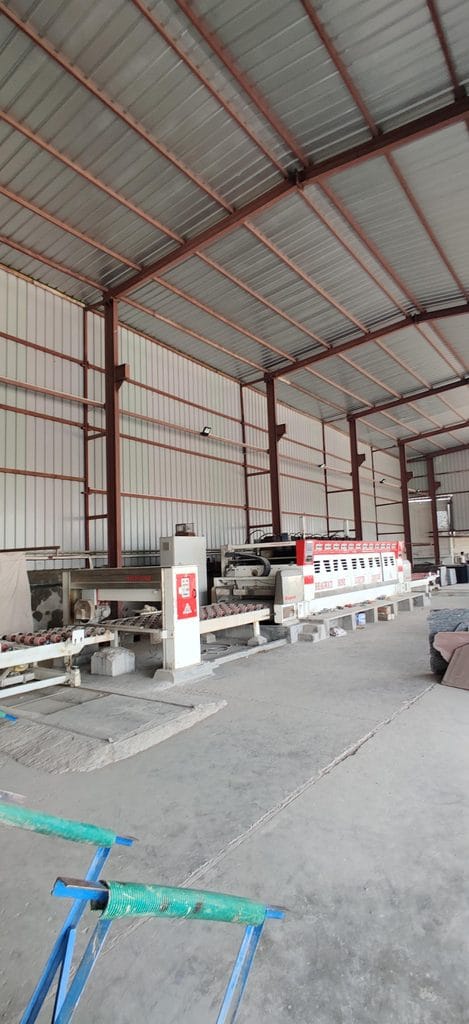
In advanced processing, resin can penetrate into very fine fissures, cure and become part of the treated slab. Vacuum systems may be used to help resin penetrate deeper into the stone. After curing, the slab is ground and polished. Dynamic Stone Tools
Therefore, when somebody says:
- Resin-treated marble
- Resined marble
- Epoxy marble
- Epoxy-filled marble
- Resin-filled marble
- Epoxy-treated marble
- Resin-treated slab
they are generally referring to natural stone that has undergone some form of resin filling or reinforcement during processing.
However, these terms should not automatically be considered identical because surface filling, deep resin treatment, backside reinforcement and mesh backing are different processes.
Is Resin Treatment in Marble Good or Bad?
This is probably the biggest question customers ask:
Is resin in marble good or bad?
The correct answer is:
Resin treatment itself is neither simply good nor bad. The quality of the stone, type of resin, purpose of treatment and quality of processing are what matter.
A properly resin-treated marble can be easier to process, more stable during handling and capable of achieving a better polished appearance.
On the other hand, poor-quality resin, improper curing, inadequate drying or excessive superficial filling can create problems later.
The Natural Stone Institute describes resin treatment as a process used to fill pits, cracks and fissures and enhance the appearance of polished natural stone. Natural Stone Institute
So, resin-treated does not mean fake marble.
The stone underneath can still be 100% natural marble.
Why Does Marble Need Resin Treatment?
Natural marble is not manufactured in a factory like ceramic tiles or engineered stone. It comes from a natural deposit.
During quarrying, block cutting, transportation and slab production, natural weaknesses may become visible.
These can include:
- Hairline cracks
- Micro-fissures
- Small holes
- Open veins
- Natural pores
- Pinholes
- Small cavities
- Weak areas
- Fragile sections
- Open grain
- Surface depressions
Some varieties naturally contain more fissures than others.
Resin treatment helps processors deal with these characteristics.
According to stone-industry technical literature, resin treatment can improve the usability of stones containing micro-fissures, strengthen vulnerable areas and improve the finished appearance. stoneworld.com
What Exactly Is Epoxy Resin?
Epoxy resin is a synthetic thermosetting material. In professional applications, epoxy is generally supplied as a resin component and a hardener/curing component.
When the two components are mixed in the correct proportion, a chemical reaction occurs and the liquid resin cures into a solid material. Main Website
In the natural-stone industry, epoxy can be used for:
- Filling marble cracks
- Filling micro-fissures
- Filling pores
- Strengthening slabs
- Bonding stone
- Reinforcing fragile marble
- Bonding fiberglass mesh
- Repairing damaged areas
- Improving the surface before polishing
The formulation is selected according to the particular stone and the intended application.
What Is Epoxy Marble?
The term epoxy marble can sometimes be confusing.
It does not necessarily mean that the marble itself is artificial.
In the natural-stone industry, epoxy marble generally means natural marble that has been processed or reinforced using epoxy resin.
For example:
Natural Marble Block → Slab Cutting → Drying → Epoxy/Resin Treatment → Curing → Grinding → Polishing → Finished Marble Slab
The stone remains natural.
The epoxy is used as a treatment material.
This distinction is extremely important for customers buying premium marble.
Resin Treatment vs Epoxy Treatment: Are They the Same?
Not always.
The word resin is a broad term.
Different resin systems can be used for different applications.
Common materials used in natural stone processing include:
| Treatment Material | Common Purpose |
|---|---|
| Epoxy Resin | Deep filling, reinforcement, bonding and strengthening |
| Polyester Resin | Filling cracks, holes and surface imperfections |
| UV Resin | Fast-curing filling and processing applications |
| Marble Mastic | Small repairs, filling and colour matching |
| Cement-based Fillers | Traditional filling applications |
| Epoxy + Fiberglass Mesh | Reinforcement of fragile slabs |
The natural-stone industry has historically used polyester resin for marble filling, while epoxy systems have increasingly been used where deeper penetration, adhesion and reinforcement are required. stoneworld.com
How Is Resin Treatment Done on Marble?
The exact process varies from factory to factory and according to the type of marble.
A typical industrial process may look like this:
Step 1: Marble Block Cutting
The raw marble block is cut into slabs.
At this stage, the internal characteristics of the marble become visible.
Step 2: Slab Inspection
The slabs are inspected for:
- Cracks
- Fissures
- Pores
- Holes
- Weak areas
- Open veins
- Surface defects
Step 3: Drying
Moisture needs to be controlled before certain resin applications.
Industrial processing may use heating or kiln systems to remove moisture and prepare pores for resin penetration. Nitco
Step 4: Resin Application
The appropriate resin is applied to the slab.
Depending on the process, the resin may be applied:
- Manually
- Automatically
- Under vacuum
- With specialized machinery
- To the top surface
- To the backside
- In combination with fiberglass mesh
Step 5: Penetration
Low-viscosity epoxy can penetrate small fissures and pores.
Vacuum treatment can help remove trapped air and encourage resin penetration into small openings. Nitco
Step 6: Curing
The resin is allowed to cure.
Some industrial facilities use controlled heating or curing systems to accelerate and control this process.
Step 7: Grinding
After curing, the slab is ground.
This removes excess resin from the surface and levels the slab.
Step 8: Polishing
Finally, the marble goes through the polishing process.
This produces the smooth, glossy finish customers see in a finished marble slab.
What Is Vacuum Resin Treatment?
Vacuum resin treatment is a more advanced form of resin processing.
In simple terms, the slab is placed inside a vacuum system where air is removed from pores and fissures.
The resin can then enter areas that may not be adequately filled by simple surface application.
A documented industrial marble-processing process describes vacuum treatment as a way of removing air from the slab so epoxy can penetrate very fine cracks and cavities. Nitco
This is particularly useful when dealing with:
- Fragile marble
- Highly fissured marble
- Exotic marble
- Certain quartzites
- Porous stones
- Stones with extensive micro-cracking
Why Is Fiberglass Mesh Used With Epoxy?
You may have seen a marble slab with a fiberglass mesh or net attached to its backside.
This is another form of reinforcement.
The mesh helps provide additional support to a fragile slab.
In many cases, epoxy is used to bond the mesh to the stone.
This should not be confused with a simple surface resin fill.
There are several different treatments:
1. Surface resin filling
Resin fills cracks, holes and surface imperfections.
2. Deep resin treatment
Resin penetrates into micro-fissures and pores.
3. Backside reinforcement
Resin is applied to the backside to improve stability.
4. Fiberglass mesh reinforcement
Fiberglass mesh is bonded to the backside using an adhesive/resin system.
These processes can sometimes be combined.
Which Marble Is Usually Resin Treated?
Not every marble requires resin treatment.
The requirement depends on the geology, porosity, fissuring, colour, application and processing characteristics of the material.
Common categories that may receive resin or filling treatment include:
1. White Marble
White marbles often show small cracks and fissures very clearly.
Examples may include certain varieties of:
- Vietnam White Marble
- Carrara-type white marble
- Statuario-type marble
- Calacatta-type marble
- Satuario marble
- Lasa-type white marble
The exact requirement varies from block to block.
2. Exotic Marble
Exotic marbles with dramatic veins may contain natural fissures.
Resin treatment can help stabilize these materials during cutting and fabrication.
3. Onyx
Onyx can be particularly fragile and is frequently reinforced or treated depending on the material and application.
4. Travertine
Travertine naturally contains holes and cavities.
Filling is therefore a normal part of processing for many travertine products. Industry references note that many travertines and marbles have historically been filled using polyester resin, cement or similar materials. stoneworld.com
5. Quartzite
Some highly fissured quartzites are frequently resin-treated.
6. Certain Granites
Certain granite varieties contain significant micro-fissures and may benefit from resin treatment.
However, dense and relatively uniform granites may not require the same treatment.
Does Every White Marble Need Epoxy?
No.
This is an important point.
Two blocks of the same marble variety can behave differently.
One block may have:
- Very few fissures
- Dense structure
- Good natural strength
while another block from the same general deposit may contain:
- More cracks
- Open veins
- Micro-fissures
- Weak zones
Therefore, resin treatment should be considered based on the actual slab, not simply the name of the marble.
Why Is Resin Used on Premium White Marble?
White marble is one of the most popular materials for luxury interiors.
But white marble can also make imperfections highly visible.
A small hairline fissure that is barely noticeable in a dark stone can become very obvious in white marble.
Resin treatment can help:
- Fill small fissures
- Stabilize fragile sections
- Improve the surface
- Reduce visible openings
- Prepare the slab for polishing
- Improve the final appearance
For premium white marble, proper processing is therefore extremely important.
Is Resin-Treated Marble Fake?
No.
This is one of the biggest misconceptions in the marble market.
Resin treatment does not automatically make natural marble artificial.
A natural marble slab can be:
Natural marble + resin treatment
Just like natural wood can be polished, filled or coated without becoming artificial wood.
The underlying geological material is still marble.
A resin-filled natural stone is also specifically distinguished from composite or engineered stone: the resin may fill fissures while the underlying stone remains natural. prostonetools.com
Resin-Treated Marble vs Artificial Marble
| Feature | Resin-Treated Natural Marble | Artificial/Engineered Stone |
|---|---|---|
| Basic material | Natural stone | Manufactured material |
| Origin | Quarry | Factory |
| Natural veins | Yes | Designed/manufactured |
| Natural variations | Yes | Usually controlled |
| Resin treatment | May be used | Depends on product |
| Geological formation | Millions of years | Manufactured |
| Natural block | Yes | No |
| Appearance | Naturally variable | More controlled |
Therefore, resin-treated marble and artificial marble are not the same thing.
What Are the Advantages of Resin Treatment?
There are several reasons why professional stone processors use resin.
1. It Can Strengthen Fragile Marble
Some marble is naturally fragile.
Resin can help consolidate micro-fissures and weak sections.
2. It Can Reduce Breakage During Processing
A fragile slab may break during:
- Cutting
- Grinding
- Polishing
- Transportation
- CNC processing
- Installation
Proper reinforcement can reduce these risks.
3. It Can Fill Small Cracks
Small natural fissures can be filled with suitable resin.
4. It Can Improve the Polished Appearance
After grinding and polishing, filled areas can appear considerably smoother.
5. It Can Improve Material Yield
Some natural stones would otherwise have a significant amount of unusable material.
Resin treatment can allow certain blocks/slabs to be processed into usable products, reducing waste. Industry literature has specifically identified improved quarry yield and reduced waste as important benefits of resin treatment. stoneworld.com
6. It Can Help With Fabrication
Stable slabs are easier for fabricators to cut, shape and install.
Are There Any Disadvantages of Resin Treatment?
Yes.
Resin treatment is not magic.
The quality of treatment matters enormously.
Potential concerns include:
- Poorly cured resin
- Incorrect resin selection
- Poor surface preparation
- Moisture trapped inside the slab
- Improper resin-to-hardener ratio
- Superficial filling rather than proper penetration
- Poor adhesion
- Resin discolouration in certain circumstances
- Visible patches
- Differences between treated and untreated areas
The stone industry has long discussed the importance of selecting suitable resin systems and controlling processing conditions because different stones respond differently to treatment. stoneworld.com
This is why the processing factory and quality control are just as important as the marble itself.
Epoxy vs Polyester Resin in Marble
This is another important topic for anyone buying marble.
| Feature | Epoxy Resin | Polyester Resin |
|---|---|---|
| Penetration | Can penetrate very fine fissures depending on formulation | Generally more surface-oriented |
| Adhesion | Generally high | Good for many filling applications |
| Strength | High | Suitable for many filling applications |
| Cost | Usually higher | Generally lower |
| Curing | Often slower | Often faster |
| Reinforcement | Very suitable | Used in traditional reinforcement/filling |
| Applications | Structural treatment, deep filling, bonding | Filling, patching and traditional processing |
| Processing | Often requires controlled conditions | Can be easier/faster for some applications |
Technical literature notes that epoxy systems can offer stronger adhesion and better mechanical/chemical performance than older polyester systems in certain stone-consolidation applications. stoneworld.com
However, more expensive does not automatically mean better for every application.
The resin must be selected according to the stone and intended use.
Is Epoxy Better Than Normal Resin?
There is no universal answer.
If by “normal resin” you mean traditional polyester resin, epoxy can offer advantages in certain applications, particularly where deeper penetration, adhesion and structural reinforcement are important.
But polyester resin remains widely used for certain filling and processing applications.
The right question is not:
“Which resin is always better?”
The better question is:
“Which resin system is appropriate for this particular marble and application?”
Does Resin Change the Colour of Marble?
It can.
A properly selected transparent resin may preserve the natural appearance while filling fissures.
Certain resins can also enhance the depth or visual richness of a stone.
Coloured or colour-matched fillers may be used when repairing visible cracks or holes.
Stone-industry sources describe the use of clear and pre-coloured epoxy systems depending on the desired result. stoneworld.com
For premium marble, colour matching is particularly important.
A poor colour match can make a repaired area more noticeable rather than less noticeable.
Does Resin Make Marble Waterproof?
This needs a little clarification.
Resin treatment can reduce water penetration through treated cracks, pores or fissures, depending on the process and coverage.
But it should not automatically be described as making the entire marble slab completely waterproof.
Natural stone can still have different absorption characteristics.
The actual performance depends on:
- Stone type
- Porosity
- Resin type
- Treatment depth
- Coverage
- Processing quality
- Installation conditions
Therefore, don’t confuse resin treatment with a general-purpose surface waterproofing treatment.
Does Resin Treatment Last Forever?
The answer depends on the treatment and conditions.
A properly engineered and cured resin treatment can provide long-term reinforcement.
However, no responsible marble supplier should assume that every resin treatment has identical lifetime performance.
The quality of:
- Resin
- Hardener
- Mixing
- Drying
- Vacuum treatment
- Curing
- Application
- Stone preparation
all matters.
Can Resin-Treated Marble Be Used for Flooring?
Yes.
Resin-treated natural marble is commonly used for flooring and other architectural applications.
But the suitability of the particular marble should be considered.
For flooring, buyers should evaluate:
- Strength
- Thickness
- Porosity
- Surface finish
- Expected traffic
- Installation method
- Maintenance
- Quality of resin treatment
A fragile decorative marble may be beautiful but may not be the appropriate choice for every high-traffic application.
Can Resin-Treated Marble Be Used for Walls?
Yes.
It can be used for:
- Feature walls
- Hotel walls
- Lobby walls
- Residential walls
- Elevation
- Decorative panels
- Temple projects
- Staircase areas
- Interior cladding
For large-format wall applications, the fabricator should also consider the slab’s reinforcement and installation system.
What Is the Difference Between Filled Marble and Unfilled Marble?
This is a very useful distinction for buyers.
Filled Marble
Small cracks, holes, fissures or pores have been treated with a filling material.
Unfilled Marble
The natural openings and fissures remain largely untreated.
Neither category automatically means “good” or “bad.”
It depends on the marble.
Some materials look beautiful with their natural fissures exposed, while others benefit significantly from filling and reinforcement.
Should You Buy Resin-Treated Marble?
Instead of asking only:
“Is this marble resin treated?”
a buyer should ask:
1. Why was it resin treated?
Was it for:
- Filling?
- Structural reinforcement?
- Polishing?
- Crack stabilization?
- Mesh reinforcement?
2. What resin was used?
Ask whether the treatment uses:
- Epoxy
- Polyester
- UV resin
- Other stone-specific system
3. Was the slab properly dried?
Moisture control is important for resin adhesion and penetration.
4. Is fiberglass mesh present?
If yes, ask why it was applied and what reinforcement system was used.
5. How was it cured?
Proper curing is important for performance.
6. Does the slab have natural fissures?
A natural fissure is not necessarily a defect.
The important question is how the fissure has been treated and whether it affects the intended application.
How Can You Identify Resin-Treated Marble?
There are several clues.
Look at the backside.
You may see:
- Fiberglass mesh
- Resin coating
- Reinforcement material
Look at the edges.
Excess resin or filled areas can sometimes be visible around the edge of a slab. The Natural Stone Institute notes that resin treatment can often be detected by examining slab edges. Natural Stone Institute
Look at the surface.
Filled fissures may appear slightly different from untreated natural veins.
Ask the supplier.
A professional marble supplier should be able to tell you whether a slab has undergone resin treatment and what type of treatment was performed.
Resin Treatment Does Not Hide the Natural Identity of Marble
One of the biggest advantages of buying natural marble is its individuality.
Every block can have different:
- Veins
- Shades
- Crystal structures
- Fossils
- Patterns
- Fissures
- Grain
- Movement
Resin treatment is generally intended to process these natural characteristics—not to turn marble into an artificial material.
This is particularly important with premium imported and Indian marble where the natural pattern is often the main reason customers select the stone.
Why Do Marble Factories Use Epoxy?
A professional marble processing factory has to solve several problems simultaneously.
The goal is not simply to make marble look shiny.
The factory needs to produce slabs that can survive:
Block cutting → Handling → Resin treatment → Grinding → Polishing → Packing → Transportation → Fabrication → Installation
A weak slab can break at almost any stage.
Epoxy and other resin systems can therefore become an important part of modern stone processing.
Some industrial marble facilities use controlled heating, fiberglass reinforcement, epoxy filling, vacuum processing and curing as integrated steps in slab production. Nitco
Marble Resin Treatment and Marble Polishing
Resin treatment and polishing are closely connected.
The basic sequence can be:
Raw Block
↓
Slab Cutting
↓
Drying
↓
Crack & Fissure Inspection
↓
Resin/Epoxy Treatment
↓
Vacuum Treatment Where Required
↓
Curing
↓
Grinding
↓
Polishing
↓
Quality Inspection
↓
Finished Marble Slab
The polishing stage removes excess resin from the main surface while retaining the resin in cracks, pores and depressions that have been treated. Natural Stone Institute
Does Every Crack Need Resin?
No.
Natural marble can have different types of cracks and fissures.
A small stable hairline fissure is different from a major structural crack passing through a slab.
This distinction is extremely important.
Minor fissure
May be suitable for filling or resin treatment.
Major structural crack
May require more extensive reinforcement or may make the slab unsuitable for a particular application.
Therefore, resin should not be considered a solution for every type of damage.
Resin Treatment in Indian Marble
India has a huge variety of natural stones, including marble from Rajasthan and other parts of the country.
Indian marble can vary enormously in:
- Density
- Colour
- Grain
- Veining
- Porosity
- Fissuring
- Strength
For example, marble from different mining regions can require different processing approaches.
In Rajasthan, where marble processing is a major industry, resin treatment and filling can be an important part of slab processing for suitable materials.
The same principle applies to imported marble.
Resin Treatment in Imported Marble
Imported marble can travel long distances before reaching the customer.
Materials may come from countries such as:
- Italy
- Turkey
- Vietnam
- Spain
- Portugal
- Greece
- Iran
- Tunisia
- Brazil
- Other natural-stone-producing regions
Many premium imported stones have complex natural structures.
Some varieties are relatively stable, while others contain significant natural fissuring.
Resin treatment can therefore be part of the normal processing route for certain imported marble varieties.
Is Resin-Treated Marble Inferior to Unfilled Marble?
Not necessarily.
This is another misconception.
An unfilled slab is not automatically superior.
A heavily fissured, untreated slab may be more difficult to process and install than a properly resin-treated slab.
Similarly, a dense and stable marble may not need heavy resin treatment.
Therefore:
The quality of the marble should be judged by the stone itself, its processing quality and suitability for the intended application—not simply by whether resin has been used.
What Should Architects and Interior Designers Know About Resin Marble?
Architects and designers selecting marble should understand that resin treatment is part of modern natural-stone processing.
When specifying a marble, it can be useful to ask suppliers about:
- Resin treatment
- Mesh backing
- Slab thickness
- Fissures
- Surface filling
- Polishing
- Bookmatching
- Batch consistency
- Recommended applications
- Installation requirements
This becomes particularly important when specifying expensive marble for:
- Luxury residences
- Hotels
- Commercial lobbies
- Temples
- High-end restaurants
- Staircases
- Feature walls
- Large-format flooring
Resin Treatment in Bookmatched Marble
Bookmatching is one of the most visually impressive applications of natural marble.
Two slabs are opened like the pages of a book so their veins mirror each other.
For heavily veined marble, resin treatment can be especially important because the same natural geological features that create dramatic patterns may also create fissures.
However, the resin should not be used to make an artificial pattern.
The objective is to stabilize and process the natural stone while preserving its natural beauty.
Common Marble Terms Related to Resin
When searching for marble online, you may come across many terms.
Here is a simple explanation:
| Term | Meaning |
|---|---|
| Resin Marble | Natural marble treated with resin |
| Resined Marble | Marble that has undergone resin treatment |
| Resin-Filled Marble | Marble with cracks/pores filled with resin |
| Epoxy Marble | Marble processed or reinforced with epoxy |
| Epoxy-Filled Marble | Marble where epoxy fills fissures/voids |
| Epoxy Treatment | Treatment using epoxy resin |
| Resin Treatment | General term for resin-based processing |
| Mesh-Backed Marble | Marble reinforced with fiberglass mesh |
| Fiber-Backed Marble | Marble with fiber reinforcement |
| Unfilled Marble | Marble without filling treatment |
| Natural Marble | Marble originating from natural stone deposits |
10 Common Myths About Resin-Treated Marble
Myth 1: Resin-treated marble is artificial.
Fact: Resin treatment can be applied to genuine natural marble. The underlying stone remains natural. prostonetools.com
Myth 2: Every resin-treated marble is low quality.
Fact: Resin treatment can be a normal and technically useful processing method.
Myth 3: Premium marble should never have resin.
Fact: Some premium and exotic stones may benefit from professional resin treatment because of their natural fissuring.
Myth 4: Resin completely removes every crack.
Fact: Resin can fill suitable fissures and defects, but it is not a universal cure for major structural cracks.
Myth 5: Every marble needs epoxy.
Fact: Treatment requirements vary by material and individual slab.
Myth 6: Polyester and epoxy are exactly the same.
Fact: They are different resin systems with different properties and applications.
Myth 7: Resin means the marble is fake.
Fact: Resin treatment and artificial stone manufacturing are completely different concepts.
Myth 8: More resin means better marble.
Fact: Excessive or inappropriate treatment is not automatically better.
Myth 9: Untreated marble is always stronger.
Fact: A highly fissured untreated slab may be more vulnerable than a properly reinforced slab.
Myth 10: Resin is only used for appearance.
Fact: Depending on the treatment, resin can serve aesthetic, filling and structural/reinforcement purposes.
How to Select Good Resin-Treated Marble
If you’re buying marble for a major project, don’t simply ask:
“Is it epoxy?”
Instead, ask the supplier:
Material Quality
- What is the origin of the marble?
- Which block is this slab from?
- Is the slab naturally fissured?
- Is the material suitable for my application?
Resin Quality
- Which resin has been used?
- Is it epoxy or polyester?
- Is the resin transparent or colour matched?
- Has the slab undergone vacuum treatment?
Reinforcement
- Is there fiberglass mesh?
- Is the mesh on the backside?
- What bonding system has been used?
Processing
- How was the slab dried?
- How was the resin cured?
- Has the slab been properly ground and polished?
Installation
- What thickness is recommended?
- Is additional reinforcement required?
- What installation method should be followed?
What Is the Best Marble: Resin or No Resin?
There is no universal answer.
Instead, select according to:
Marble quality + application + processing + resin quality + reinforcement + installation
For example:
A highly fissured exotic marble may benefit significantly from professional resin treatment.
A dense, stable marble may require little or no resin treatment.
A fragile onyx may need substantial reinforcement.
A porous travertine may require filling as part of normal production.
So the right question is not:
“Is resin marble good?”
The better question is:
“Has this particular marble been processed correctly for the application I intend to use it for?”
Why Evershine Marbles Focuses on Understanding Marble Processing
At Evershine Marbles, marble is not viewed simply as a polished slab.
Understanding the journey from natural mine to finished slab is important.
From the selection of the raw block to cutting, inspection, resin treatment, grinding, polishing and final selection, every stage can affect the finished product.
The knowledge and experience associated with the marble trade are built over years of working with different materials, blocks, mines and processing conditions.
The leadership and experience of Mr. Vinod Kumar Agarwal, Mr. Alok Agarwal and Mr. Bharat Agarwal can also be mentioned in the context of Evershine Marbles’ long-standing involvement and understanding of the marble business.
For customers, architects and contractors, this kind of practical knowledge is particularly useful when selecting natural marble because every marble block can behave differently.
Evershine Marbles – Your Source for Natural Marble and Stone
Whether you are searching for:
- Makrana Marble
- Makrana White Marble
- Albeta Makrana Marble
- Dungri Marble
- Plain White Marble
- Milky White Marble
- Vietnam White Marble
- Lasa White Marble
- Italian Marble
- Imported Marble
- Indian Marble
- Marble Slabs
- Marble Blocks
- Granite
- Quartzite
- Kota Stone
choosing the right material is only the first step.
Understanding quality, processing, resin treatment, thickness, polishing, reinforcement and application suitability is equally important.
At Evershine Marbles, customers can discuss their project requirements and select material according to the intended application rather than simply selecting a marble based on colour or price.
Final Verdict: Is Resin Treatment Good or Bad?
Let’s make it simple.
Resin treatment can be beneficial when:
✔ The marble contains natural fissures
✔ The stone needs reinforcement
✔ The slab is fragile
✔ Small cracks or pores need filling
✔ Better polishing is required
✔ The treatment is professionally performed
✔ The correct resin is selected
✔ Proper drying and curing are followed
Resin treatment can become a concern when:
❌ Poor-quality resin is used
❌ The slab is not properly dried
❌ Resin is applied incorrectly
❌ Curing is inadequate
❌ Major structural cracks are simply hidden
❌ Poor colour matching is used
❌ The buyer is not informed about significant repairs
❌ Treatment is used to disguise serious damage
Therefore, the simple answer is:
Good-quality resin treatment is a normal and useful part of natural-stone processing. Resin-treated marble is not automatically inferior, and resin treatment does not make natural marble artificial.
The important thing is how, why and where the resin has been used.
Frequently Asked Questions About Marble Resin Treatment
1. What is resin treatment in marble?
Resin treatment is the process of applying resin to natural marble to fill pores, fissures and small cracks and, depending on the process, reinforce the slab.
2. What is epoxy marble?
Epoxy marble generally refers to natural marble that has been treated, filled or reinforced using epoxy resin.
3. Is epoxy marble natural?
Yes, it can be. Epoxy treatment does not automatically mean the marble is artificial.
4. Is resin good for marble?
Properly selected and professionally applied resin can improve stability, fill fissures and assist in achieving a good polished finish.
5. Is resin bad for marble?
Poor-quality or incorrectly applied resin can cause processing and appearance problems. The quality of treatment matters.
6. Which marble uses resin?
Certain white marbles, exotic marbles, travertines, onyxes, quartzites and fissured granites may be resin-treated.
7. Does all marble require epoxy?
No. Treatment depends on the natural characteristics and intended application of the marble.
8. Is resin-treated marble fake?
No. Natural marble can be resin-treated while remaining natural stone.
9. What is fiberglass mesh in marble?
Fiberglass mesh is a reinforcement material attached to the backside of certain fragile slabs, often using resin or epoxy.
10. What is vacuum resin treatment?
It is a process in which air is removed from pores and fissures so resin can penetrate more effectively.
11. Is epoxy better than polyester resin?
They have different properties and applications. Epoxy can offer advantages for deeper penetration and reinforcement, while polyester is widely used for certain filling applications.
12. Can resin-treated marble be used for flooring?
Yes, provided the specific marble is suitable for flooring and has been properly processed and installed.
13. Can resin hide cracks?
Resin can fill suitable cracks and fissures, but it should not be considered a way to make major structural damage disappear.
14. How can I know whether marble is resin treated?
Inspect the edges and backside for signs of filling or reinforcement and ask the marble supplier about the processing history. Natural Stone Institute
Conclusion
Resin treatment in marble is an important part of modern natural-stone processing.
Natural marble contains the characteristics of the earth from which it comes—veins, pores, fissures, crystals and variations. Resin and epoxy technologies allow stone processors to work with many of these natural characteristics more effectively.
From epoxy-filled marble and resin-treated marble to fiberglass mesh reinforcement and vacuum treatment, different techniques are used for different stones and applications.
The presence of resin should therefore not be the only factor used to judge a marble slab.
Instead, look at the complete picture:
Origin → Block Quality → Natural Characteristics → Resin Treatment → Reinforcement → Grinding → Polishing → Thickness → Application → Installation
That is the right way to understand natural marble.
And when you are selecting marble for a home, hotel, temple, commercial project or luxury interior, working with an experienced marble supplier can make a significant difference in selecting the right material for the job.
Looking for Natural Marble, Makrana Marble or Imported Marble?
Talk to Evershine Marbles for marble blocks and slabs, including Makrana Marble, Makrana White Marble, Albeta Makrana Marble, Dungri Marble, Plain White Marble, Indian Marble, Imported Marble, Vietnam White Marble, Lasa White Marble and other natural stones.
Evershine Marbles — From Natural Stone to Exceptional Spaces.